
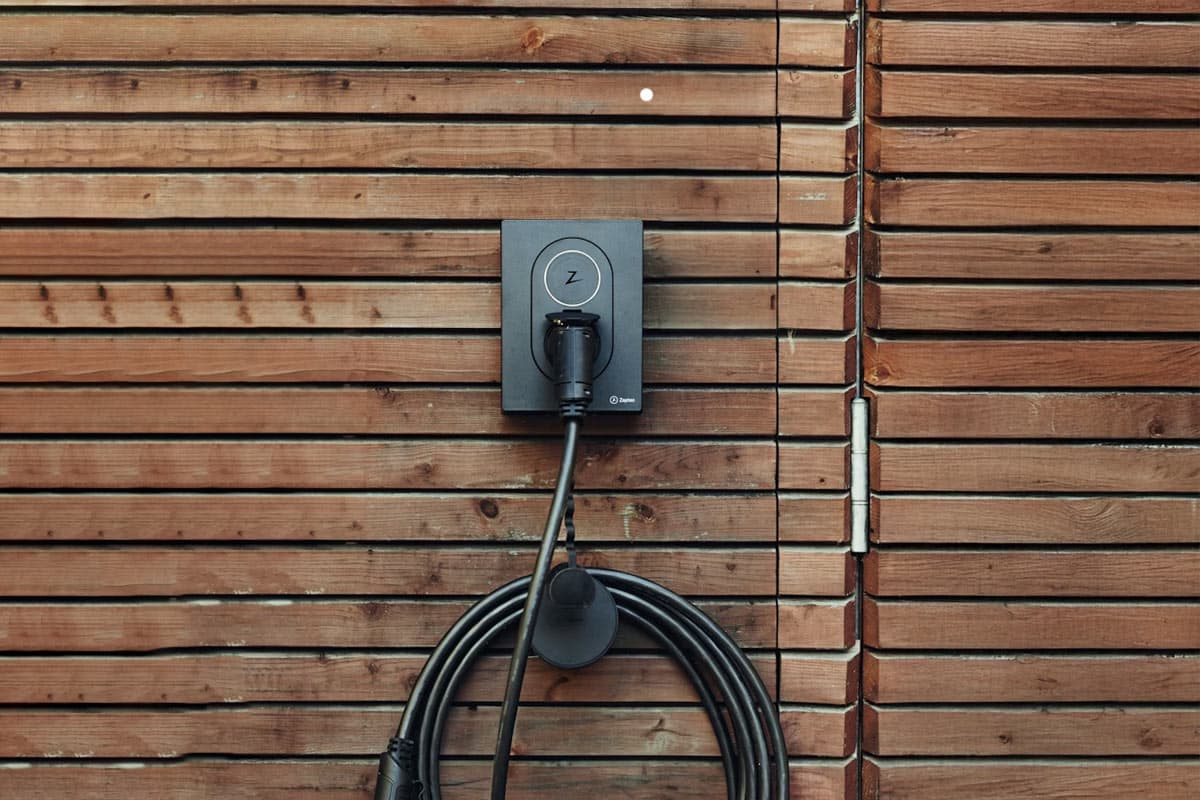
Wall-mounted smart EV charger installed on the outside of a house in Essex
Home EV charging

EV Charger Installation in Colchester and Essex

A home charger is a dedicated circuit carrying a heavy load for hours at a time, so it needs to be planned around your supply, your earthing and where you park. Martin Kaine Electrical installs smart home EV chargers across Colchester and Essex, checks the property can take the extra demand, and handles the paperwork so the job is properly recorded.

Free Quote

Smart
chargers to current regulations
30+
years in the trade
DBS
checked electricians

Choosing the right home EV charger

Chargers sold for home use in Great Britain must be smart chargers under the 2022 Smart Charge Point Regulations, which means they can schedule charging and shift it away from peak times. Beyond that, the main choice is between a tethered unit with the cable fixed to it and an untethered unit with a socket you plug your own cable into. We talk through how you use the car before recommending either.

  • Tethered chargers are quicker to use day to day and suit a single household car
  • Untethered units look tidier and work with different connector types if you change car
  • Smart scheduling lets you set charging to run on a cheaper overnight tariff
  • App and Wi-Fi connectivity checked at the parking spot before the unit is mounted

Supply, load and earthing checks

A typical home charger draws around 7kW on a single-phase supply, which is a big addition to a house that may already have an electric shower, oven and heat pump. We assess maximum demand against the main fuse and consider load management where the margin is tight. Earthing matters too: many UK homes have a PME (TN-C-S) supply, and an EV charger outdoors needs protection against an open PEN fault, either built into the charger or provided by a separate earth rod arrangement.

  • Maximum demand assessed against the existing main fuse and supply
  • Load-limiting or current-sensing options where capacity is close to the limit
  • Open PEN fault protection confirmed, or an earth rod installed where appropriate
  • Dedicated RCD-protected circuit run from the consumer unit to the charger

Cable routes, parking and the DNO

You need off-street parking such as a driveway or garage, because charging cables cannot be run across a public pavement. The cable route from the consumer unit to the charger often decides how involved the job is, whether that is a short run through an external wall or a longer route through loft, garage or underground. Once installed, the local distribution network operator (DNO) is notified of the new charger, and in some cases their approval is needed beforehand.

  • Charger positioned so the cable reaches the car's charging port comfortably
  • Cable routed neatly through lofts, garages or ducted underground where needed
  • Notification to the DNO handled as part of the installation
  • Older or undersized consumer units identified before the work is booked
How the job runs

From first call to finished work

  1. 01

    Parking and supply check

    We look at where the car sits, where the consumer unit is and what supply and earthing the property has.

  2. 02

    Charger and route agreed

    You choose tethered or untethered, and we agree the mounting position and the cable route to it.

  3. 03

    Install and commission

    The circuit is run, the charger is mounted and connected, then set up on your Wi-Fi and app.

  4. 04

    Test, certify, notify

    The circuit is tested to BS 7671, a certificate is issued and the DNO is notified of the new load.

Why customers choose Martin Kaine Electrical

  • Over three decades of electrical work behind every charger survey
  • Supply and earthing checked properly rather than assumed
  • A certificate for the new circuit issued once testing is complete
Questions

Common questions

What affects the cost of a home EV charger installation?

The charger model is one part of it. The rest depends on the distance from the consumer unit to the parking spot, whether the cable goes through walls, lofts or underground, whether your consumer unit has space and suitable protection, and whether an earth rod or load management is needed. We give a fixed quote after looking at the property.

Do I need to tell my energy supplier before an EV charger goes in?

The formal notification goes to the distribution network operator, which runs the cables and substations in your area, and we handle that. Your energy supplier is separate, but it is worth speaking to them about an EV or off-peak tariff so the charger's smart scheduling can make use of it.

Can I have a charger if I park on the street?

A home charger needs off-street parking such as a driveway, garage or private parking space. Running a charging cable across a public pavement creates a trip hazard and is not something we will install.

Will my fuse box need replacing for an EV charger?

Not always. If the existing consumer unit has a spare way and suitable protection, the charger circuit can often be added to it. Older boards with rewireable fuses, no RCD protection or no spare capacity usually need upgrading first, and we will tell you at the survey.

Need an electrician in Colchester & North Essex?

Tell us what you need and we will come back with clear advice and a quote.